Wednesday, 25 July 2012

The Madh isle Tourism

Madh isle is situated in the north western seaboard locality of Juhu, in the country components of Mumbai, Maharashtra. The locality of Madh isle is enclosed in the east by the Malad Creek and on the western brim by the Arabian sea. Madh Island is well connected with all localities of Mumbai by street and waterways.

In recent times, it has developed into a well liked tourist location and has some well admired bungalows, vacation vacation holiday resorts, and appealing locations for picnics and parties. There are several little angling villages and farmlands in Madh isle. Kolis and East Indian Roman Catholics pattern the foremost groups of the locality. The Aarey Milk Colony established adjacent Madh isle is a dairy ranch and provision milk to the city of Mumbai.

Madh isle, assembled by the Portuguese, was previous a watchtower and subsequent on a educating location for military scholars and cadets. Now anglers live most of the locality. Geographically, this isle would have been a peninsula if it were not split up by a little creek that is surrounded by mangroves, which splits up it from the mainland adjacent Aksa.

At the time of reduced rush, persons are adept to stroll over the beach sands from Erangal’s Dana Paani sandy shore to Aksa sandy seashore. whereas the sandy shores in Madh isle are not apt for bathing due to powerful currents and moving sands, these are well liked picnic positions.

One of the most well liked localities in Madh isle is Erangal town, which dwellings the well known Erangal sandy seaseashore. Here, most of the persons count on agriculture for their livelihood. The location of adoration of St. Bonaventure on Erangal sandy shore is an very old Portuguese place of worship that was constructed in the 16th years. The localizedized commemoration of the Feast day of St. Bonaventure is a major affinity here and is held on the second Sunday of January every year.

About The Alandi Holidays

Alandi, furthermore renowned as Devachi-Alandi, is a little village established on the banks of the stream Indrayani, at an average elevation of 577 m overhead ocean level, in Maharashtra. The village is well liked for its temples and devout places and is significance due to the samadhi of the saint and bard, Dnyaneshwar, known for converting the Bhagavad Gita to Marathi. The location is furthermore renowned for collections of Shiva Lingas.

The village is enclosed by several devout attractions and every year, a large number of visitors arrive here for offering prayers at the temples in and round the village. The major temples dispersed here include Ram Temple, Vitthal-Rakhumai Temple, Muktai Temple, and Krishna Temple. The location furthermore has another temple, which is dedicated to the Gujarati saint, Jalasan Baba.

Saint Dnyaneshwar Samadhi, in front of Lord Shri Siddheshwar Temple, is a foremost tourist affinity of this location. numerous devotees, especially of the Varkari sect, visit this place all round the year. The temple is built round the samadhi and located beside a ghat. Fairs are held at this place on Kartika Ekadashi and Ashadhi Ekadashi, which convey many devotees here. During the equitable of Kartika Ekadashi, a parade of pilgrims reaches the village for proposing prayers in this temple.

Other locations of interest in and round this village are Vitthala-Rakhumai Temple, Siddhabet, Jalaram Temple, Saint Tukaram Samadhi, Sambhaji Raje Bhosle Samadhi and Dnyaneshwar's Wall.

Tuesday, 24 July 2012

About Jalna holidays

Jalna town is the administrative head agency of the locality of Jalna in Maharashtra. This little village is part of the Aurangabad Division and wrappings an locality of round 7,718 sq km. The north of this town is surrounded by Jalgaon locality and on the east is bordered by Parbhani locality. Besides, the name Jalna is drawn from from the occupation of Julaha or weaver, which was clever by a rich Muslim merchant.

The village is located close to Jamb Samarth town, which is suggested to be the birthplace of Samarth Ramdas Swami. Satmala and Ajanta high surrounds surround the locality towards the to the north brim. The village of Jalna was part of the preceding generous state of Hyderabad, but after Indian self-reliance it was moved to Aurangabad District. On 1st May 1982, Jalna locality was formed which comprises the major villages of Jalna, Jafrabad and Bhokardan.

According to Hindu mythology, Lord Rama and Goddess Sita are acknowledged to have resided here. It was furthermore a house of the well renowned Abul Fazl and was part of the kingdom of Nizam ul Mulk Asaf Jah. in addition to, Jalna was held as a jagir by one of the generals of Akbar during the Mughal Empire. For a short time span of time, Jalna was under the direct of dependants of Shinde, but was annexed by a competitor from Pune during the Battle of Udgir in 1760.

In 1803, Jalna seen the assault of Assaye, all through which the locality came under the direct of Colonel Stevenson's armies. subsequent, the whole locality was apprehended by the Nizam of Hyderabad and was part of the Nizam’s direct till Indian independence. Jalna town is well renowned for the appealing very vintage temples, which encompass Shree Ganesh Temple, Matsyodari Devi Temple, Mamma Devi Temple and Anandi Swami Temple.

Chikkalthana aerodrome, popularly renowned as the Aurangabad aerodrome, is the closest aerodrome from Jalna which is established round 53 km away. Jalna trains position is well-connected with the nearest railhead at Aurangabad. Buses and taxis are often accessible from Aurangabad, Mumbai and other neighbouring villages to come to the village of Jalna.

Sunday, 22 July 2012

About Udvada holidays

Udvada is a coastal town located round 187 km north of Mumbai. established between the Union Territory of Daman and the locality village of Valsad on the Maharashtra-Gujarat border, it is furthermore renowned as the Mecca of Zoroastrians. Udvada is a holy location of Parsis, which was constructed in the 7th years by invaders from Iran. Udvada derived its title from ‘uth vada’, which means ‘grazed by camels’. The condition of the place visited was identical before it was converted into a angling town.

The annals of Udvada designated days back to the 7th century when the Muslim invasion of Iran led to the negligence of Zoroastrians. The Zoroastrians were marginalised and fled to India in alignment to preserve their culture and belief. conveying with them the sacred blaze, they first come to Sanjan, which is established 30 km from Udvada.

Historians state that throughout the 14th years, Sanjan was assaulted by armed forces of the Delhi Sultanate and the Parsis afresh departed themselves into the caves of Barhot high grounds. These caves are located at a expanse of around 14 km from south of Sanjan. throughout the 18th century, a decision was made to come back the sacred blaze to Sanjan; although, the priests preferred to stay in Udvada.

Majority of the community belong to the Persian belief. angling being the major commerce of Udvada, it performances a crucial function in changing the heritage as per localized culture and traditions taken up by the community. Shivaratri, Holi and Dussehra are some of the prominent carnivals celebrated in the place visited.

Atash Behram is a well liked tourist attraction here. Being one of the most important sacred fire-temples of Zoroastrians, the temple is the oldest relentlessly burning fire-temple in the world. It is one of nine Atash Behrams in the world, out of which eight are established in western India, with one in Udvada. It is accepted that a Parsi must visit any of these fire-temples one time throughout their life time.

Friday, 20 July 2012

About Ranakpur Holiday's.

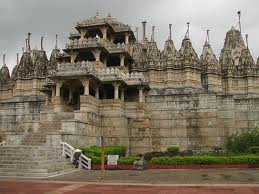
Ranakpur is a little village established in the Aravalli range, between Udaipur and Jodhpur in Rajasthan. It lies in the Pali district of Rajasthan, which lies 60 km from the city of Udaipur. The town is renowned for a large Jain Temple, which is furthermore one of the most significant Jain temples in the homeland.

Ranakpur sketches from its title from Rana Khumba. It is said that Rana Khumba provided the land for the building of the Jain temples in the locality, when a professional deserving Dharna Shah approached him and notified him about his vision of a great temple.

Another Jain temple in the town apart from the main Jain Temple is the Sun Temple, which is established right converse the foremost one. The occurrence of these two Jain temples makes Ranakpur one of the most important pilgrimage centres for the Jain community in India.

The foremost Jain temple complex wrappings a total locality of 48,000 rectangle km and has 1444 distinct pillars. The temple furthermore has two large bells which weigh 108 kg each and whose noise echo through the whole convoluted.

There are other temples too in the town which are dedicated to distinct Gods of the Hindu community. Being located in Rajasthan, it familiarity very moderately hot summers with the warmth extending from 38° to 42° Celsius. The winter months of December to February know-how temperatures between 11° to 20° Celsius.

The best time to visit Ranakpur is in the months of September to stride, when the heat continues snug and there is not much rainfall. Ranakpur is well connected by means of streets, while it does not have a teaches station.

About Nandurbar Holiday's.


established in the Khandesh district of the state of Maharashtra, Nandurbar is a locality, whose head office is based at Nandurbar town. This locality portions its boundaries with Dhule locality from the south and south-eastern side. From western and northern side, the locality is bounded by the state of Gujarat. State of Madhya Pradesh bounds the locality from the north and north-eastern edge. Narmada River delimits the northern boundary of this locality.

Covering an locality of 5035 sq. km, Nandurbar locality is split up into six talukas, namely Akkalkuwa, Akrani Mahal, Taloda, Shahada, Nandurbar and Navapur. Nandurbar includes persons engaged in cultivation of jawar, wheat, rice, and groundnuts. Ahirani, Marathi, Hindi, Bhili, Pawari and Gujarati are the major languages and dialects spoken in this district.


Adivasi Pawara, Tipari tribal dance and Songadya dances are the integral part of heritage of Nandurbar. Tribal persons of the district specialises in mud craft and pottery making. major affinity of the locality is Prakasha, which is furthermore renowned as Dakshin Kashi and is one of the oldest temples in the district. visitors visiting the locality furthermore frequent to the world's biggest wind ranch having an yield of 10000 MW, which is being constructed 30 km away from Nandurbar town.

Chhatrapati Shivaji worldwide aerodrome at Mumbai is the main international entrance to the place visited. Nandurbar Railway position is the major railhead assisting the locality. Tourists can furthermore come to Nandurbar by bus from Dhule, Jalgaon, Mumbai, Valsad and Surat. Nandurbar Bus position is the major coach terminal, which serves the district. The best time to visit Nandurbar is throughout winter time of the year, which expands from December to February.

Thursday, 19 July 2012

About Mantralayam travelpackages


Mantralayam or Manchale is a town established in the Kurnool locality of Andhra Pradesh, at a expanse of 256 km from the capital village of Hyderabad. Mantralayam, the abode of the Samadhi of Vaishnava saint Shri Raghavendra Swamy, is a well renowned pilgrimage location visited in South India.

Mantralayam is established adjacent the boundary of Karnataka and Andhra Pradesh along the banks of stream Tungabhadra, a head tributary of stream Cauvery. Mantralayam is considered as a holy location of very old source. According to legend, monarch Prahalada offered his yagnyas to Lord Rama in this locality, all through the Dwapara Yuga.

As per remarks, the barren land aaround Mantralayam along the river banks of Tungabhadra was presented over to the Mutt of Shri Raghavendra Swamy by Nawaab Siddi Masud Khan of Adoni. Shri Raghavendra Swamy was the disciple and the successor of Sri Sudheendra Theertharu of Kumbakonam, who educated him Dwaita Vedanta, syntax and ancient scholarly works and Vedic texts.

subsequent, Shri Raghavendra Swamy came to be renowned as ‘Manchale Ragappa’ by his ardent followers. He attained Jeeva Samadhi at Mantralayam in 1671. It is acknowledged that Shri Raghavendra Swamy was the incarnation of Bhakta Prahalada, who was profoundly dedicated to Lord Vishnu. It is furthermore accepted that, by attaining Samadhi, Shri Raghavendra entered in to the Vrindavana (Sajeeva Vrindavana) and that he will fulfill his devotees’ yearns for another 360 years.

Today, the little village of Mantralayam is synonymous with the Tomb Temple of Shri Raghavendra Swamy, which is renowned by the name ‘Vrindavana’. Mantralayam is furthermore well admired for Manchalamma Temple and Venkateswara Swamy Temple.